How young people are shaping the future of digital health and why your voice matters
_______________________________________________________________________
Every day, young people interact with digital health systems. From telemedicine consultations to electronic health records, vaccination registries and mobile health apps, our health information is increasingly stored, shared and analysed through digital platforms.But an important question remains: who decides how that data is used?
Across the world, governments are developing policies and laws that determine how health data is collected, protected and governed. These decisions shape whether digital health systems build trust and expand access to care, or deepen inequalities and expose communities to misuse and surveillance.
Despite being among the most digitally connected populations globally, young people are rarely present in the policy spaces where these decisions are made. This gap means youth are often affected by health data governance decisions without having meaningful opportunities to influence them.
To begin changing this dynamic, Transform Health launched its Annual Youth Virtual Forum in 2025 under the #MyDataOurHealth campaign, the forum combined practical toolkits, open discussion and bold commitments bringing together more than 50 young leaders from across regions including Kenya, Senegal, India, Indonesia, Mexico and Ecuador.The goal was simple but powerful: Equip young advocates with the knowledge, tools and networks needed to influence digital health governance in their own countries.
Participants did not just learn about health data governance. They explored practical ways to advocate for stronger protections, engage policymakers and ensure digital health systems work for everyone.
The momentum created in that first forum showed something clearly: Young people are ready to shape the future of digital health governance.
The next Youth Virtual Forum will take place on 16 March 2026, bringing together young advocates from across regions to learn how to engage with digital health policy and governance. If you are interested in influencing how health data is protected and used in your country, this is a space to get involved.
Why youth engagement on this issue matters
Digital health systems are expanding rapidly across countries and regions. This expansion creates powerful opportunities to improve health care access, efficiency and equity. At the same time, it introduces significant risks of data misuse, exclusionary practices, algorithmic bias and unwarranted surveillance if health data is not governed transparently, fairly and with strong rights protections in place. Without clear safeguards, the same technologies intended to improve health outcomes can deepen inequities and erode trust.
For young people, these questions are not abstract. They directly affect how personal health information is collected, who can access it, and how digital health tools shape the care young people receive throughout their lives.
Young people are among the most digitally connected populations globally and are both primary users and future architects of digital health systems. Yet they remain underrepresented in the policy, legislative and governance spaces where health data frameworks are negotiated and adopted. This gap between digital participation and policy influence creates a structural imbalance: youth are affected by decisions on data governance but are rarely meaningfully included in shaping them.
Recognising the need to address this, Transform Health launched the Annual Youth Forum in 2025 as a way for young people to move from learning about the issue to actually advocating for change.
During the forum, participants engaged directly with leaders working at the forefront of digital health governance. Dr. Chrys Kaniki of the Africa Centres for Disease Control and Prevention (Africa CDC) and Yvonne Arivalagan of Fondation Botnar presented compelling cases for why youth leadership is not optional but essential in shaping equitable health data governance.
Dr. Kaniki underscored the urgency of strengthening African-led governance frameworks and highlighted the role of young professionals in driving accountability and implementation. As a major partner to the Africa CDC through the Youth in Digital Health Network (YiDHN), Transform Health is working collaboratively to ensure that youth voices are structurally embedded in continental digital health processes.
Similarly, Yvonne reinforced the importance of youth collaboration, noting:
“Young people are not just beneficiaries of digital health systems; we are architects of their integrity. Governance that excludes youth will always be incomplete.” Her intervention grounded the discussion in lived experience and highlighted the growing role that young advocates can play in shaping the future of digital health governance.
How Participants Engaged During the Forum
Anchored in the #MyDataOurHealth campaign, the forum was designed as a space where young people could learn how to influence digital health policy, not just talk about the issue. During the 2.5-hour workshop, participants learned what health data governance means and why it matters, while also exploring practical ways they could advocate for stronger protections in their own countries.
The session included short presentations followed by interactive discussions. After presentations on the HDG Framework and the My Data Our Health campaign pillars, participants joined multilingual breakout rooms (English, French and Spanish) to explore three core advocacy pathways: #WheresMyData storytelling, engagement with Members of Parliament, and local coalition mobilisation.
These discussions allowed participants to exchange experiences across countries, reflect on barriers they encounter when engaging policymakers, and identify practical ways they could push for better protections for health data in their own countries. By the end of the session, participants were not only deepening their understanding of digital health governance but also gaining practical tools, peer connections and clearer pathways to engage in policy conversations that shape the future of digital health.
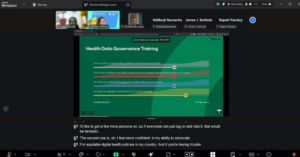
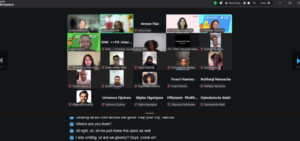
Mentimeter pulse checks captured real-time reflections on how participants’ knowledge and confidence evolved throughout the session, while plenary commitments encouraged each participant to publicly identify at least one concrete action they would take in the month following the forum.
The walkthrough of the MP Engagement Toolkit emerged as one of the most valued segments of the session. Participants explored practical templates, messaging guidance and strategic framing designed to support youth advocates in engaging Members of Parliament and other health decision-makers in their countries.
Importantly, engagement extended beyond discussion. Participants did not just talk about the issues, they started planning actions in their own communities, including data security concerns, community mistrust and limited public awareness around digital health systems.
The forum also created a space for peer learning across sectors and countries. Young professionals working in ministries of health, civil society organisations, clinics, universities and digital health initiatives exchanged experiences and insights, allowing participants to learn directly from one another’s advocacy journeys.
By the close of the session, the shift was visible. Participants were not only strengthening their understanding of health data governance but also identifying practical ways to apply these insights. Several committed to launching national conversations, submitting #WheresMyData stories, or initiating engagement with policymakers in their respective contexts.
Participant spotlight 1
 |
Beckley, Oserebameh .A. — Nigeria, Medical Student at Lagos State University College of Medicine |
Moment from the forum:
“I was particularly struck by how health data governance underpins the future of digital health: without strong laws and accountability, the same data that enables innovation can also lead to exclusion or misuse. This reminded me that as youth, our voices are essential in ensuring digital health systems are equitable, trustworthy, and people-centered.”
Concrete action
“I will adapt the MP Engagement Toolkit to advocate for transparent health data governance with young medical professionals in my community.”
LinkedIn: https://www.linkedin.com/in/oserebameh-beckley/
Participant spotlight 2
 |
Krisia Denise V. Misa — Philippines, Senior Health Program Officer at the Department of Health
|
Moment from the forum:
The forum resonated with how digital health is communicated to the public – that it is lifesaving as it helps us produce timely and accurate data for consumption of the general public. With the standards and guidelines being produced for digital health and its proper use, the forum shared tools that each and everyone can adapt advocating for digital health.
Concrete action
“I will share a #WheresMyData? drive to share our work in sharing and interpreting surveillance data for health decision-making.”
LinkedIn: https://www.linkedin.com/in/kdvmisa | Instagram: @Misaletletlet07 |
Looking Ahead: Building on Momentum
The strong engagement, knowledge gains and early advocacy actions that emerged from the 2025 Youth Virtual Forum sent a clear signal: young people are ready not just to participate in digital health conversations, but to influence them. Throughout the forum, participants expressed a strong interest in deepening their understanding of health data governance, strengthening their advocacy skills and gaining clearer entry points into policy spaces where digital health decisions are made.
To build on this momentum and respond directly to the capacity gaps identified by youth participants, Transform Health is convening the next Annual Youth Virtual Forum on Monday, 16 March 2026, from 1:00 to 3:00 PM GMT, under the theme Equitable Transformation of Digital Health – the role of Youth.
This next edition moves beyond introductory mobilisation and focuses on advanced capacity strengthening. Participants will explore how to interpret legislative processes, understand Digital Health Infrastructure frameworks and translate Health Data Governance principles into practical advocacy strategies that can influence national and global policy discussions.
As digital health expands around the world, young people need to move beyond being observers of these discussions and become active participants shaping the rules. The 2026 forum is designed to help young leaders deepen governance literacy, strengthen digital advocacy competencies and connect with peers across countries who are working to shape more equitable digital health systems.
If you are a young advocate interested in influencing how digital health systems are governed, this forum offers an opportunity to gain practical tools, connect with peers and engage with experts working in the field.
Registration details can be accessed here, and further participation information will be shared soon. We invite young advocates, coalition partners and digital health stakeholders to join us in shaping the next chapter of youth-led influence in digital health governance.