Investing in digital health
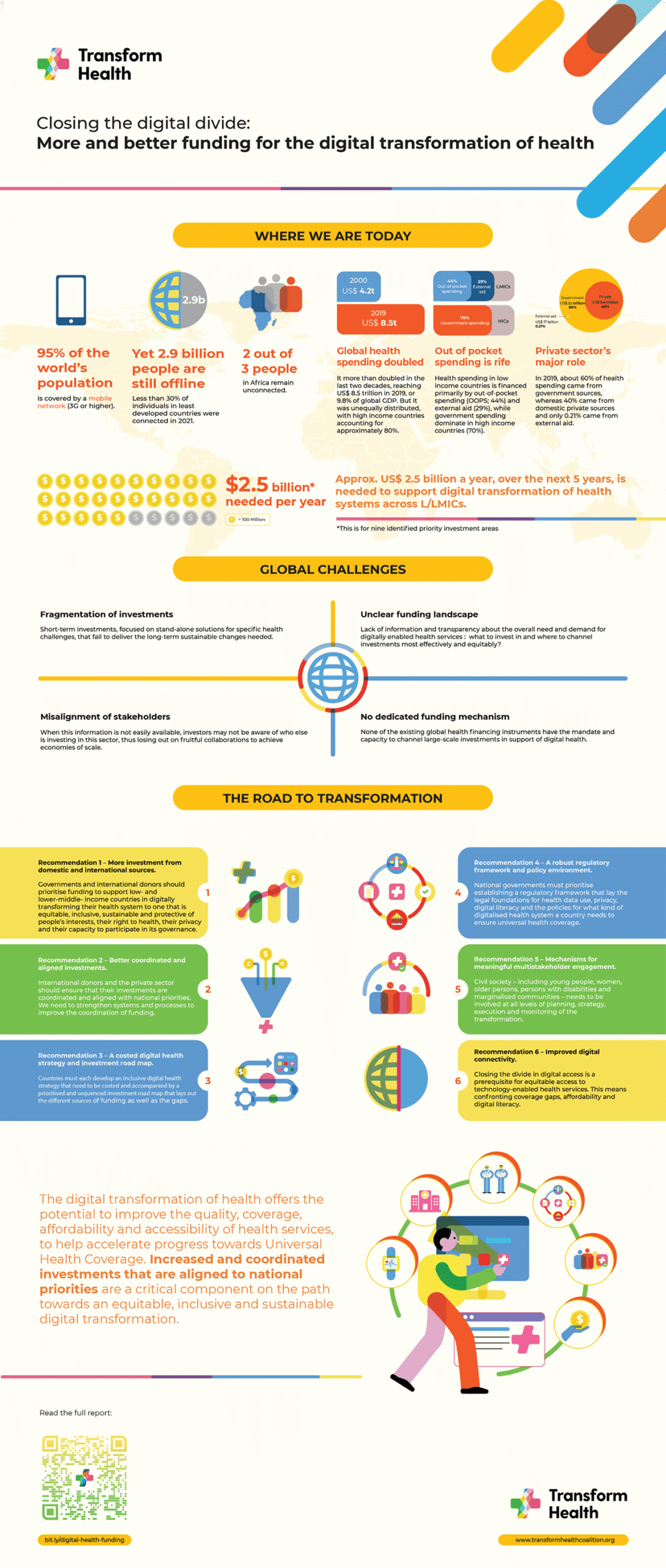
Digital health funding is a catalytic investment to accelerate progress towards universal health coverage. However, current investments are falling short to deliver the long-term and sustainable changes needed to build effective, equitable, stronger, and more resilient health systems and improved health access and outcomes.
To optimise the opportunity of digital health to accelerate UHC progress, there is a need for increased, more effective and accountable digital health investment. This funding must be part of wider health system investment, planning, and budgeting to ensure it reinforces the UHC agenda.

Challenges in the current
funding landscape
CHALLENGES

Gaps in domestic and external funding for digital health, particularly for low and lower-middle income countries

Coordination, alignment and prioritisation of investment

Lack of transparency of the funding landscape due to the absence of standardised definitions or tracking of investment.

BARRIERS TO MOBILISING ADDITIONAL RESOURCES FOR DIGITAL HEALTH

Reduced effectiveness in coordination efforts

Inability to align efforts with country priorities and needs

Difficulty ensuring funding prioritises the needs of end-users and under-served populations

Challenges in directing funding to the right areas for an equitable, inclusive, and sustainable digital health transformation


What we're calling for

Increase domestic and external investment, moving beyond short term, fragmented investments, towards more transformative, sustainable, long-term financing.

Coordinate investment to ensure funding is not fragmented or duplicative.

Align investment with national priorities and digital transformation strategies.

Prioritise investment towards to support an equitable, inclusive, and sustainable digital health transformation, and to meet the needs of end users and under-served populations.
Improve transparency and tracking of investment, routinely and in a standard way, including using the digital health investment taxonomy.

What we're doing
Advocating and making the case for investment

-
Furthering analysis and strengthening the case for investment, including through our report, ‘Closing the digital divide: More and better funding for the digital transformation of health’, which sets out a conceptual framework to guide investment and action to support equitable, inclusive, and sustainable digital health transformation.
-
Engaging in global, regional and national meetings and processes to ensure digital health investment is prioritised on political agendas, to build political will and action, and to further our calls and work.
-
Advocating with and supporting national and sub-national governments to increase and better prioritise resources for digital health.
Developing tools and resources to improve investment

-
A Digital Health Investment Checklist to guide better investment in digital health transformation. It sets out strategic considerations (part A) and priority investment areas (part B) to consider when designing and making investment decisions, to help ensure investments are equitable, sustainable, and support the goal of universal health coverage.
-
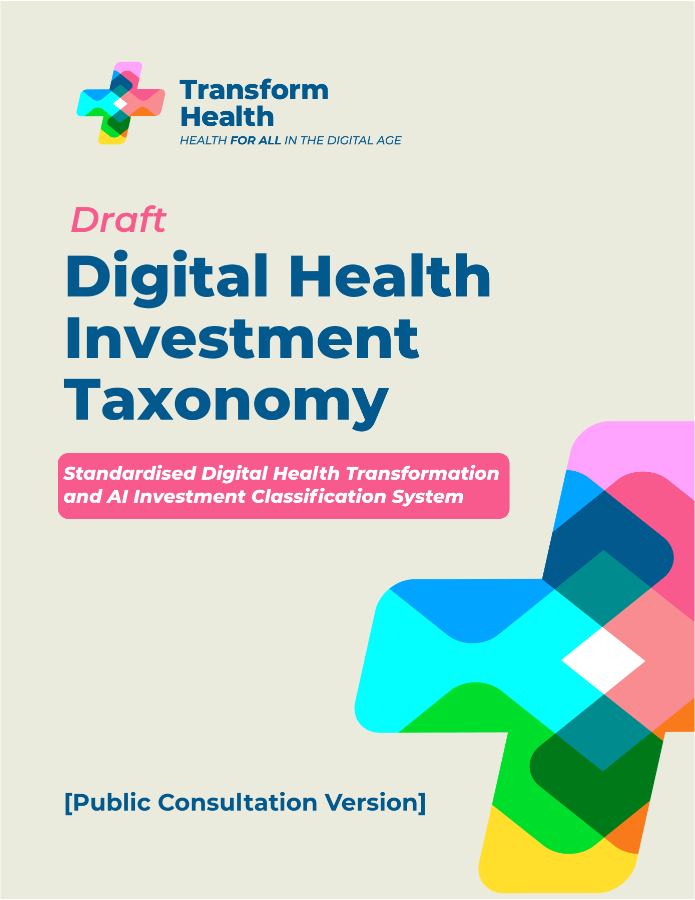
A Digital Health Investment Taxonomy to help establish a common language and framework to standardise what and how digital health investment areas are defined and tracked, to support better transparency and accountability of investment.
Supporting improved digital health investment

-
Engaging in budget processes and supporting the development of costed Digital Health Transformation Roadmaps.
-
Supporting better tracking of investment through the uptake and integration of the digital health investment taxonomy by different funders in the digital health ecosystem and its integration into existing tracking and reporting mechanisms.
Convening stakeholders

-
Convening meetings and events to build political will for improved investment, consult stakeholders, forge collaboration, and further concrete action.
-
Facilitating multi-stakeholder consultations to ensure that the perspectives of different groups were reflected in the development of key tools, resources and initiatives (e.g. Digital Health Investment Taxonomy; the Global Initiative on Digital Health resource portal)

Closing the Digital Divide: More and Better Funding for the Digital Transformation of Health