Digital Health as a driver of UHC progress
What we're doing
Making the case and galvanising action for digital health as a driver of UHC

- Strengthening the case, including through our report, The Case For Digital Health: Accelerating Progress To Achieve UHC, which lays out the digital dimensions of UHC and needed actions.
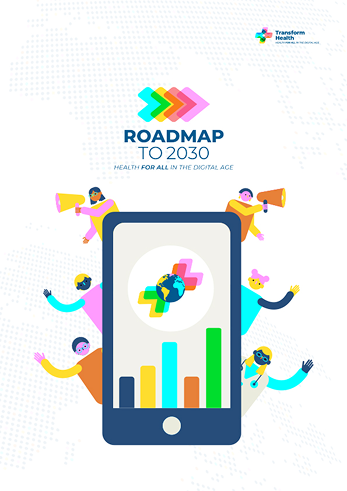
- Driving alignment, action and accountability through our Roadmap to 2030 initiative – A shared global effort to ensure digital transformation helps us achieve UHC by 2030.
- Engaging in key meetings (e.g. World Health Assembly, UNGA, UHC high-level meeting, G20, etc), processes and mechanisms (e.g. UHC2030, the Civil Society Engagement Mechanism, Global Digital Health Strategy, Global Digital Compact, Global Initiative on Digital Health among others) to ensure digital health is prioritised as part of UHC, to build political will and action, and to further our calls and work.
Supporting stronger national legislation and regulation
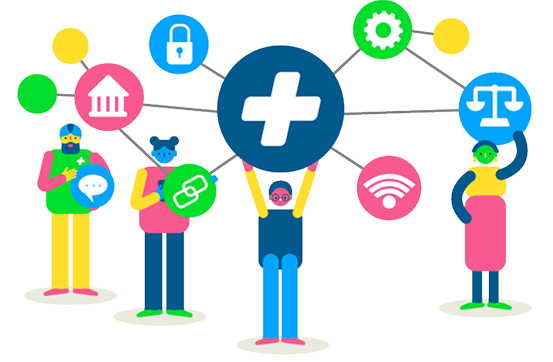
- Supporting governments to develop, enact, and implement national digital health laws, policies and regulatory frameworks – from Kenya’s landmark Digital Health Act to Senegal’s draft digital health law currently progressing through parliament
- Establishing national digital health mechanisms – agencies, committees, technical working groups – to coordinate, implement, and oversee these frameworks
Strengthening national digital health investment

- Working with governments to streamline and align digital health investment with national priorities, including through developing digital health investment roadmaps at national and sub-national levels – as seen in Senegal and Kenya
- Tracking and prioritising resource allocation for digital health to close funding gaps and improve accountability
Building digital health workforce capacity through national curricula

- Developing, piloting, and scaling national digital health curricula to build a skilled workforce – including Indonesia’s curriculum, now reaching over 1,200 students across 26 institutions, and Ecuador’s integration of digital health training across five universities
- Working with governments and academic institutions to institutionalise digital health education as a long-term investment in system capacity
Mobilising action from diverse stakeholders on a Roadmap to 2030: Health for all in the digital age
- Transform Health and our partners are leading the ‘Roadmap to 2030: Health For All in the Digital Age’.
- The Roadmap is a five-year, multi-stakeholder plan to accelerate digital transformation of health systems and progress universal health coverage by 2030.
- Designed to strengthen the enabling environment for sustainable, equitable digital health, it aligns global and national efforts toward achieving UHC by 2030 and provides clear goals, ambitions and milestones for 2026 to 2030.
Advancing gender equity in digital health

- Advocating for gender to be mainstreamed across digital health policies, investments, and governance frameworks
- Building the evidence base and tools for gender-responsive digital health transformation, including our policy brief Establishing Gender Equitable Foundations for Digital Health Transformation to Advance Universal Health Coverage
- Celebrating and elevating women’s leadership in digital health through our Women Leaders in Digital Health database
The Potential of Digital Health
If implemented in an equitable, sustainable and inclusive manner,
digital health has the potential to:

Close equity gaps by extending the reach and coverage of health services to underserved and marginalised populations, including reducing direct and indirect costs associated with accessing services.
Strengthen primary health care by improving the delivery, quality and efficiency of care and enabling more effective system integration, including continuity of care between service levels.

Improve efficiency and cost-effectiveness by streamlining health systems, reducing redundancies, facilitating better care coordination, and improving budget management, which can reduce healthcare costs and improve patient outcomes.

Foster more inclusive health governance by increasing opportunities for civil society and communities to participate in policy making, facility-level processes and governance. It can also increase the availability and transparency of data and decision making, enabling improved monitoring and accountability.

Maximise health outcomes and public benefits of health data by enabling better health surveillance, data collection, and analysis.
Key challenges and barriers

Poor or expensive connectivity

Limited digital health knowledge and skills amongst the health workforce

Lack of inclusive approaches to meaningfully engage communities and health workers

Mistrust of digital technologies
Unclear funding landscape and insufficient allocation of resources

Low digital health literacy
Weak legislative, regulatory and policy environment

Inadequate digital public infrastructure

Low political will and leadership







Latest blogs and articles
Upcoming Events
Look out for upcoming
Transform Health events